
Adapting BRIDGE for Resilience and Increased Electoral Integrity
4 November 2025
United States of America
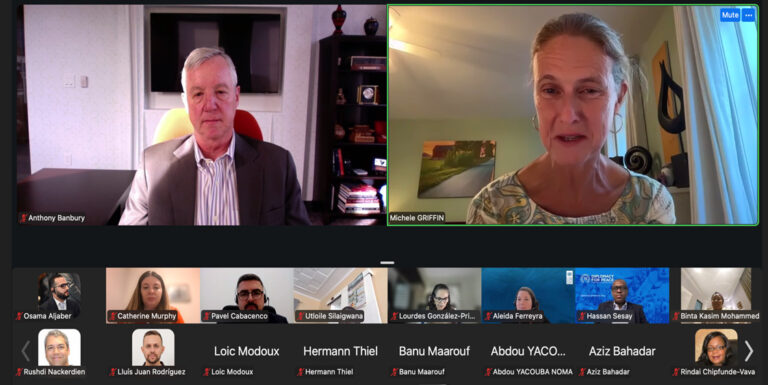
The second BRIDGE virtual event for 2025 entitled Adapting BRIDGE for Resilience and Increased Electoral Integrity took place on 4th November 2025. The event, co-organized by IFES, UNDP and UNEAD, brought together 95 participants from different regions reflecting the diversity and reach of the BRIDGE community. The meeting aimed to create an opportunity to exchange ideas, reflect on lessons learned, and co-create approaches to ensure that BRIDGE remains relevant, resilient, and responsive to the needs of election professionals. The planning and implementation involved a range of logistical, communication, engagement, and evaluative components. A moderator and three panelists were engaged to support the event.
The opening session featured brief remarks by Anthony Banbury, President and CEO of IFES, and Michele Griffin Director of UN Electoral Assistance Division. The key role that BRIDGE has played in the past 23 years in supporting the professionalization of electoral processes and in developing the capacities of electoral officials and other election stakeholders across the globe, as well as BRIDGE’s key assets such as its agility, its ability in building local capacities and its adaptability and capacity to address current and emerging challenges were among the points highlighted in the opening remarks. Among the other points raised in the opening session were references to key issues such as declining trust in democratic institutions, the rise in attacks on electoral integrity, the importance of maintaining BRIDGE’s focus on local, human-centered learning to strengthen resilience, and the need for BRIDGE to evolve as the challenges facing elections evolve. Both officials also appreciated the incredible role played by BRIDGE facilitators in keeping BRIDGE relevant and efficient, and highlighted the importance of global partnerships in BRIDGE.
Rindai Chipfunde-Vava (Executive Director of the Zimbabwe Election Support Network – ZESN ) as the moderator opened the panel by expressing gratitude to BRIDGE partners and facilitators for their collaboration and commitment, emphasizing the importance of the event in implementing the BRIDGE strategic plan 2025-2029. She highlighted the need for deeper engagement, stronger collaboration, and continuous investment in networking. Rindai introduced the following three panelists, who shared their expertise in electoral processes and training.
Binta Kasim Mohammed (Director of Training at The Electoral Institute of the Nigerian Independent National Electoral Commission -INEC) shared insights on the challenges of conducting elections in Nigeria which included the country’s large size, year-round elections, which impacts heavily on funds approved for the Commission. She explained that the electoral commission is forced to prioritize its primary mandate of conducting elections against the training and capacity building of staff. Development partners serve as a major source of staff training and capacity building but recent dwindling donor resources have impacted these efforts. To address these challenges, Binta and her team have innovated initiatives such as “brown bag sessions” to train facilitators internally, but she called for new models to support face-to-face BRIDGE workshops.
Lourdes González-Prieto (UN Women Representative in El Salvador) presented on adapting BRIDGE trainings in challenging contexts, highlighting the importance of flexibility, a strong team of diverse facilitators, and building local capacity while addressing weaknesses such as resource dependence and time constraints. She emphasized the need to capitalize on opportunities like local collaboration and innovative tools, while mitigating threats like political sensitivities and security concerns. Lourdes concluded by discussing the “superpowers” of BRIDGE, including the power of laughter, community, dialogue, and participatory knowledge sharing.
Pavel Cabacenco ( Senior Regional Election Advisor from IFES) presented on the evolution of technology use in BRIDGE training, highlighting how the program shifted from being a “no-tech zone” to incorporating various digital tools during and after the COVID-19 pandemic. He discussed the increasing role of artificial intelligence in workshop preparation and delivery, including its potential benefits like accelerated content creation and improved feedback analysis, while acknowledging concerns about inaccurate content and ethical considerations.
Two interactive polls and one post- event survey were conducted. The first poll results showed that limited funding and resources are the biggest threat to training delivery, with logistical constraints and weak participant engagement as the next significant challenges. The second poll showed that making trainings more interactive with real examples and country-specific problems was the most popular choice among participants. The post- event survey indicated a strong appreciation for the event and for the opportunity for BRIDGE community to reconnect and engage; and those who completed the survey requested for the continuation of such engagements with the BRIDGE community. They also suggested possible improvements such as allocating more time for such events (e.g. two hours instead of 90 minutes) and to consider more time for discussions- potentially with reducing the number of speakers.
The session reaffirmed BRIDGE’s continued relevance and its role in supporting professional development and electoral integrity worldwide.