Customized Multi-Module Workshop for key Stakeholders – Maputo
2-5 March 2026
Mozambique
BRIDGE STRENGTHENS ELECTORAL CAPACITY OF INCLUSIVE NATIONAL DIALOGUE STAKEHOLDERS IN MOZAMBIQUE
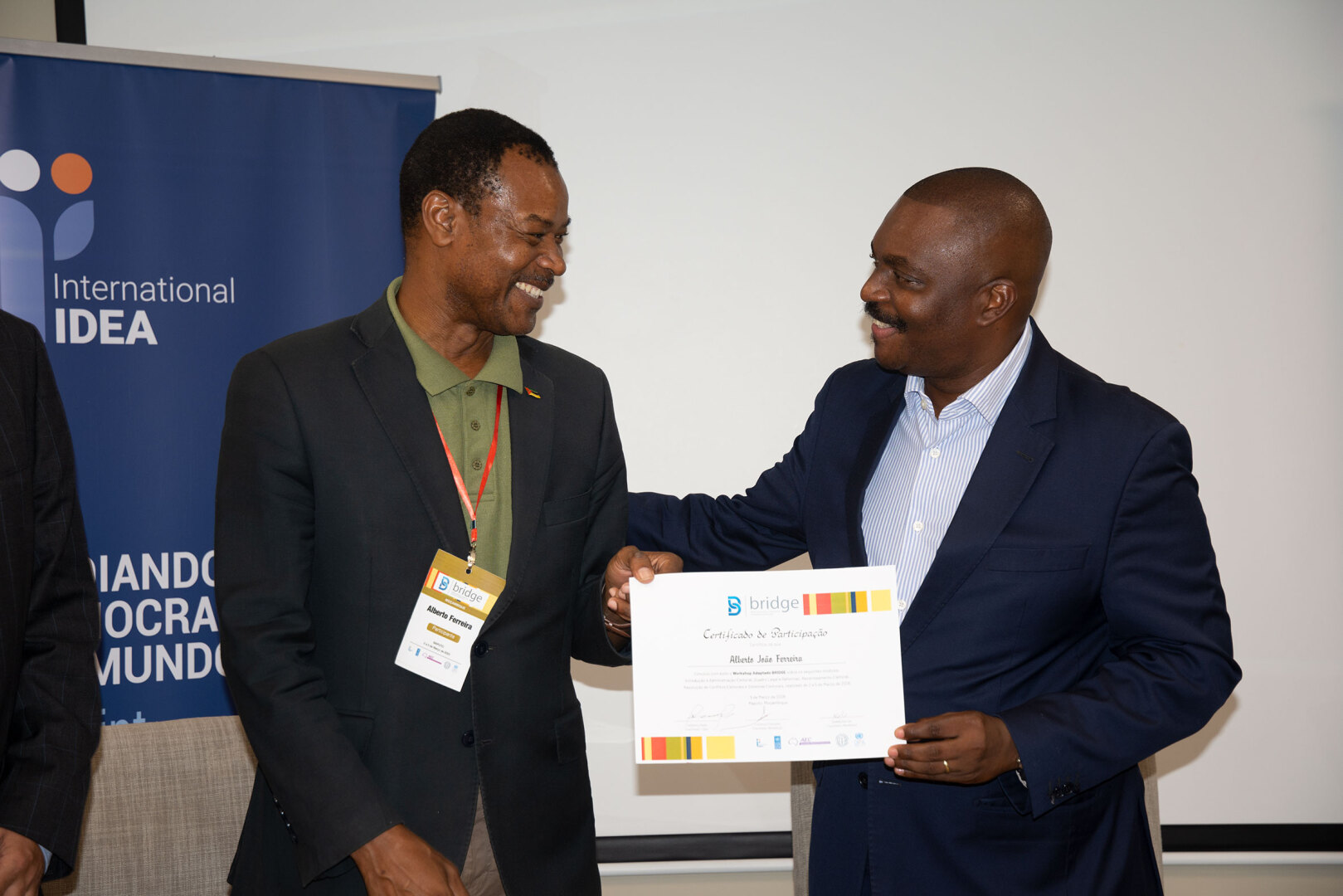
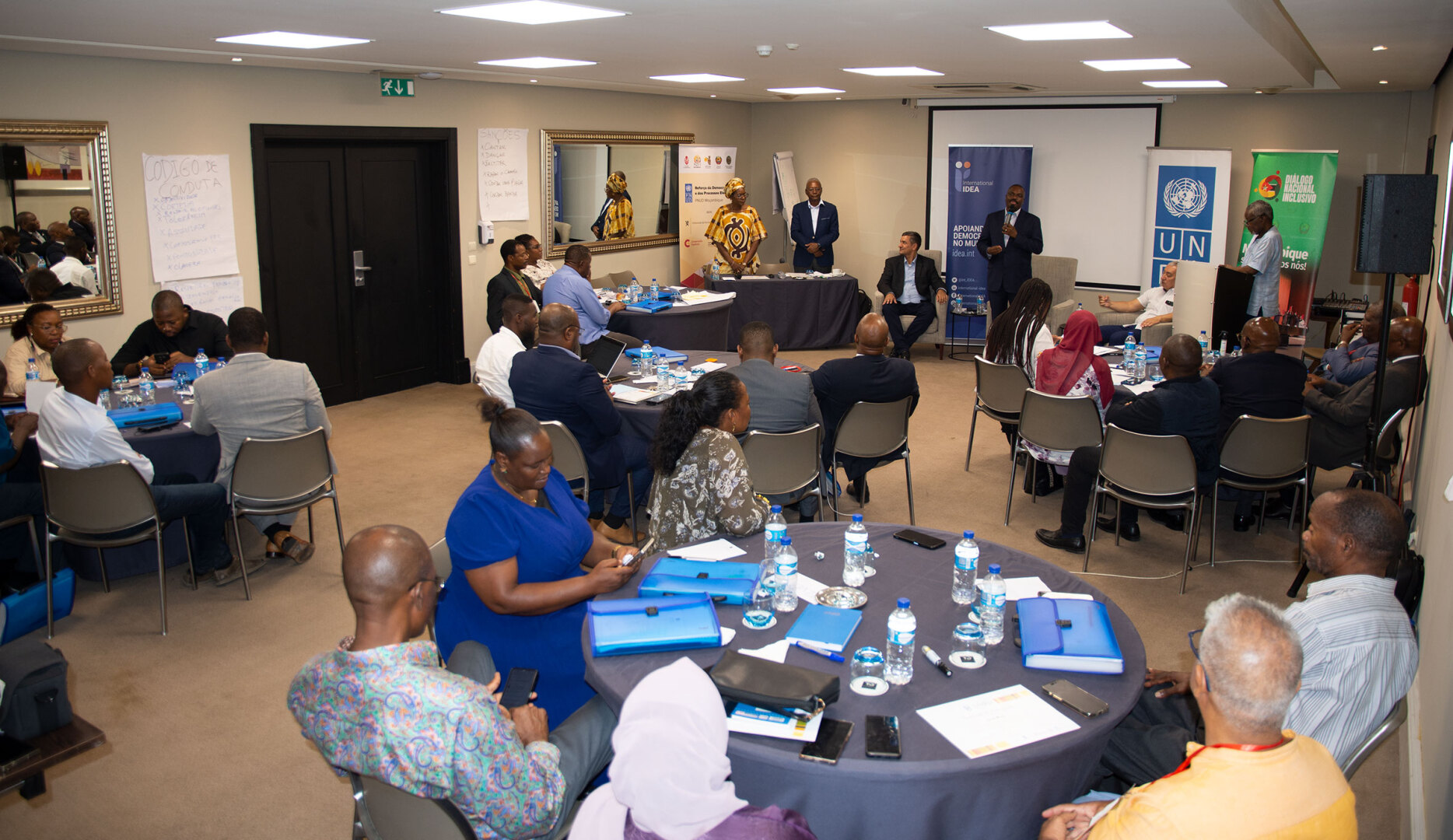
A customised BRIDGE was held in Maputo, Mozambique, from 2–5 March 2026, bringing together members of the Technical Commission for the Inclusive National Dialogue (COTE). The training was supported by the United Nations Development Programme (UNDP) and International IDEA as part of broader efforts to support Mozambique’s Inclusive National Dialogue process.
The workshop gathered 28 participants from COTE, National Electoral Commission (CNE) and Technical Secretariat for Electoral Administration (STAE), including 8 women and 20 men, representing institutions engaged in supporting the national dialogue. The training aimed to strengthen the technical and institutional capacities in electoral matters, promote alignment with international standards and good practices, and enhance inter-institutional trust among stakeholders involved in the dialogue process.
The agenda featured selected content from several core BRIDGE modules, including Introduction to Electoral Administration; Legal Framework and Electoral Reform; Electoral Dispute Resolution; Voter Registration; and Electoral Systems.
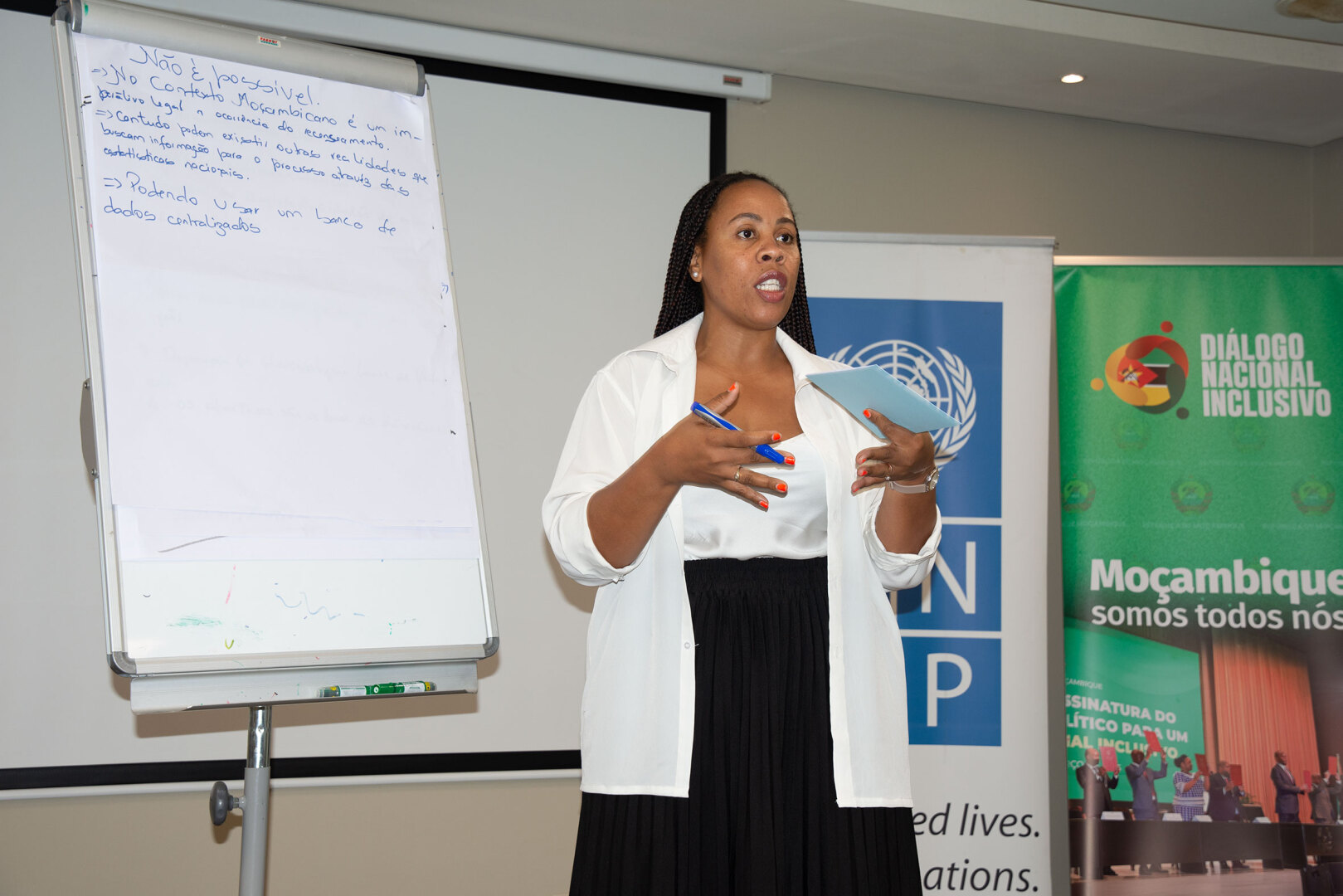
Through interactive discussions, group work and practical exercises, participants explored key principles and challenges related to electoral governance. The workshop also created a platform for constructive dialogue and shared learning, enabling participants to reflect on how electoral processes can contribute to peace, stability and reconciliation in the country.
The facilitation team was composed of BRIDGE accredited facilitators: Felisberto Naife (Lead Facilitator), Zefanias Matsimbe and Lourenço Chiluvane.
A key highlight of the workshop was the successful completion of the BRIDGE Workshop Facilitator accreditation process by Guilherme Mbilana further expanding the pool of certified facilitators capable of delivering BRIDGE training in Mozambique and the region.
Participants expressed strong satisfaction with the workshop, highlighting the relevance of the topics and the interactive methodology used. They also recommended the organisation of additional BRIDGE workshops in the future, both for COTE members and for other stakeholders involved in the Inclusive National Dialogue process.
The workshop was particularly significant as it marked the first BRIDGE training activity in Mozambique in almost ten years, reflecting the renewed commitment of partners and national stakeholders to strengthen democratic institutions, promote dialogue, and support inclusive governance processes in the country.