BRIDGE Introduction to Election Administration for CEC Albania
20-22 May 2026
Albania
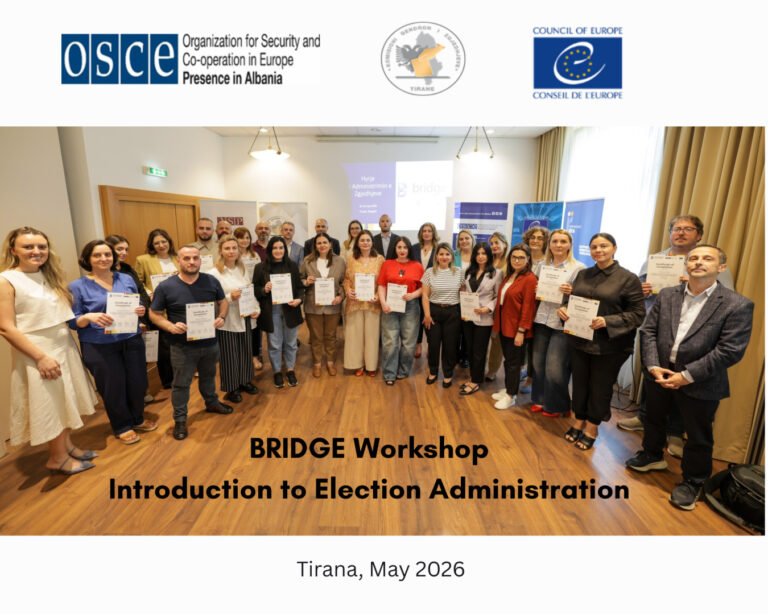
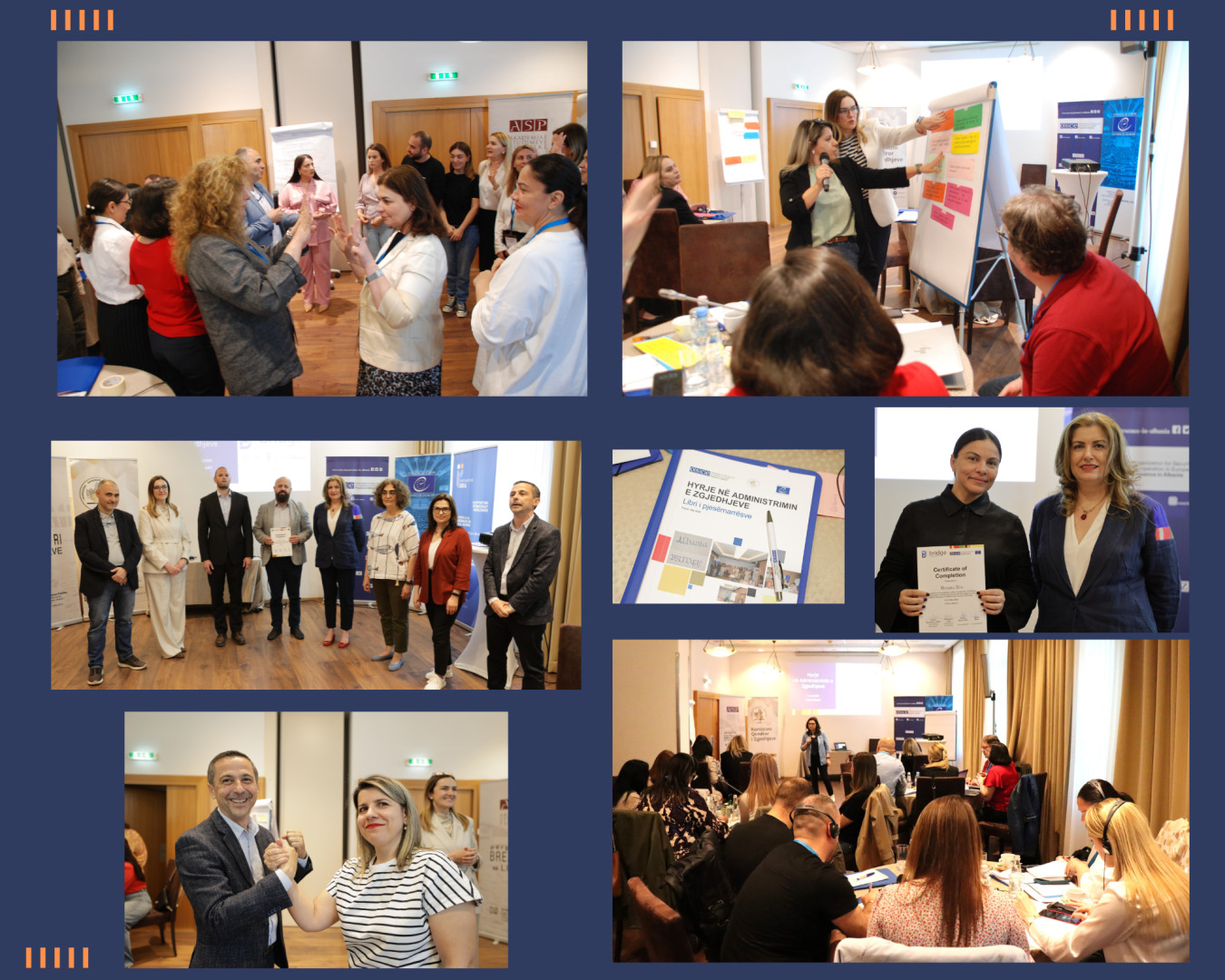
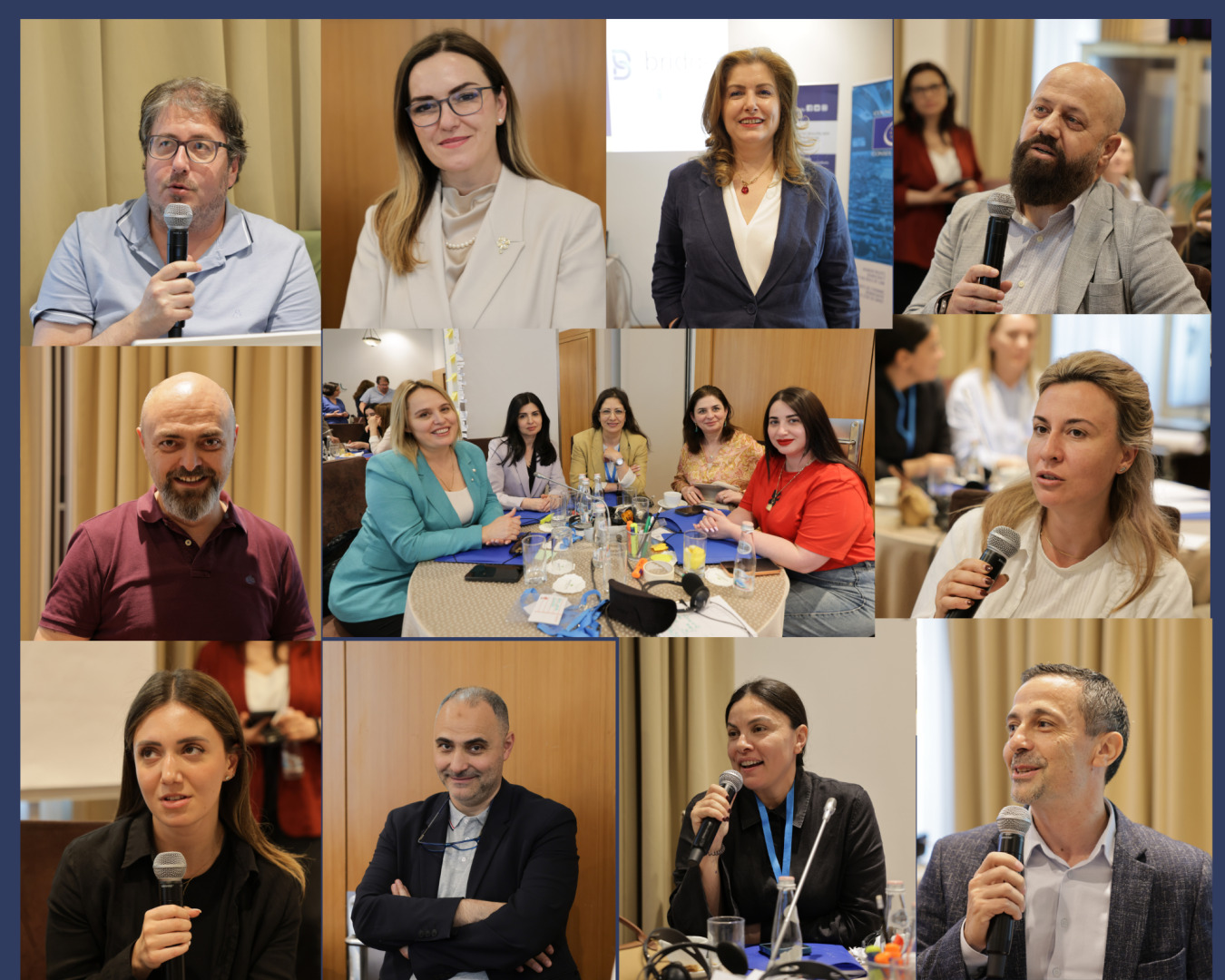
TIRANA, ALBANIA – A BRIDGE workshop on the Introduction to Election Administration module ran in Tirana, Albania, from 20 to 22 May 2026, at the Rogner Hotel. The three-day workshop brought together permanent staff of the Central Election Commission of Albania, alongside representatives of the OSCE Presence in Albania, the Council of Europe office in Tirana, IDEA International and the Albanian civil society organisation KRIIK.
The facilitation team combined regional and Albanian expertise. PhD. Doina Bordeianu (Republic of Moldova) led the workshop as BRIDGE Accrediting Facilitator. Ms. Madalena Koja (Albania) joined her as BRIDGE Workshop Facilitator. PhD. Ilirjana Nano and Mr. Erion Meta, both based at the Central Election Commission of Albania, co-facilitated as BRIDGE TtF Complete facilitators. For Ilirjana and Erion, this workshop completed the preparation and co-facilitation hours required on their accreditation pathway, which means the Albanian cohort of local facilitators has expanded with two new BRIDGE Workshop Facilitators, able to deliver future workshops on their own terms.
The methodology itself is participant-centric and designed for adult learning. Sessions combined short conceptual inputs with case work, simulation exercises, group analysis, debate and structured reflection, etc. All Participant Handbooks, presentations and handouts were customised to fit the specific workshop agenda and translated into Albanian. Course completion certificates were awarded to all participants at the close of the workshop.
The three-day curriculum followed a deliberate arc. The first day set elections within their global context, working through the criteria for free and fair elections, the concepts of trust, legitimacy and electoral integrity, and the operational principles that hold these together in practice. On day two, attention moved to technical frameworks: an introduction to electoral systems and types of representation, an analysis of the role and structures of Electoral Management Bodies, a task-based simulation on election project management, and practical scenarios on stakeholder engagement and managing diversity. The final day turned to inclusion and outreach, addressing gender, the participation of persons with disabilities, and the design of voter and civic education strategies, before closing on a self-assessment of institutional performance against the BRIDGE building blocks of excellence, a review of the main global electoral resources, the final evaluation, and the distribution of certificates.
A total of 21 participants attended: 17 from the Central Election Commission of Albania, one from the civil society organisation KRIIK, one from the OSCE Presence in Albania, one from the Council of Europe office in Tirana, and one from IDEA International. The mix mattered. Even if the workshop’s primary target was CEC permanent staff, having external stakeholders in the room turned several of the sessions on stakeholder engagement, integrity and inclusion into live conversations rather than abstract exercises.
What stood out across the three days was the appetite of the participants for the more difficult conversations. The CEC is currently engaged in its second strategic planning exercise, and several sessions, in particular those on EMB structures, institutional performance and the building blocks of excellence, fed directly into questions the institution is asking of itself. The workshop closed on a note of continuity rather than completion, with two new in-house facilitators on track for full BRIDGE accreditation and a clear set of follow-up topics for future BRIDGE work in Albania.
The workshop was supported by the OSCE Presence in Albania’s project “Support to Electoral Reform and Process in Albania”, funded by Sweden, Switzerland, U.S. Mission to the OSCE and Poland, and the Council of Europe’s project “Strengthening Elections’ Integrity in Albania”, funded by the Federal Republic of Germany and implemented by the Academy of Political Studies and the Central Election Commission of Albania.