Customized Modular Workshop on Boundary Delimitation and Voter Registration
19-22 August 2025
Lesotho
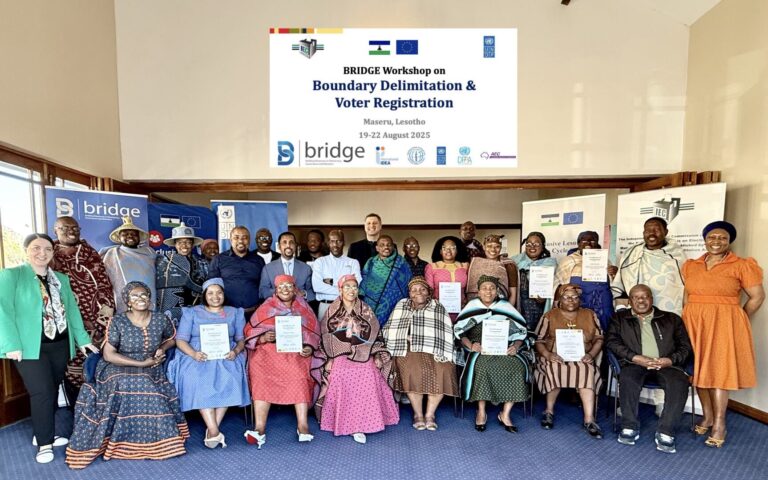
BRIDGE Workshop on Boundary Delimitation and Voter Registration: Strengthening Electoral Capacity in Lesotho
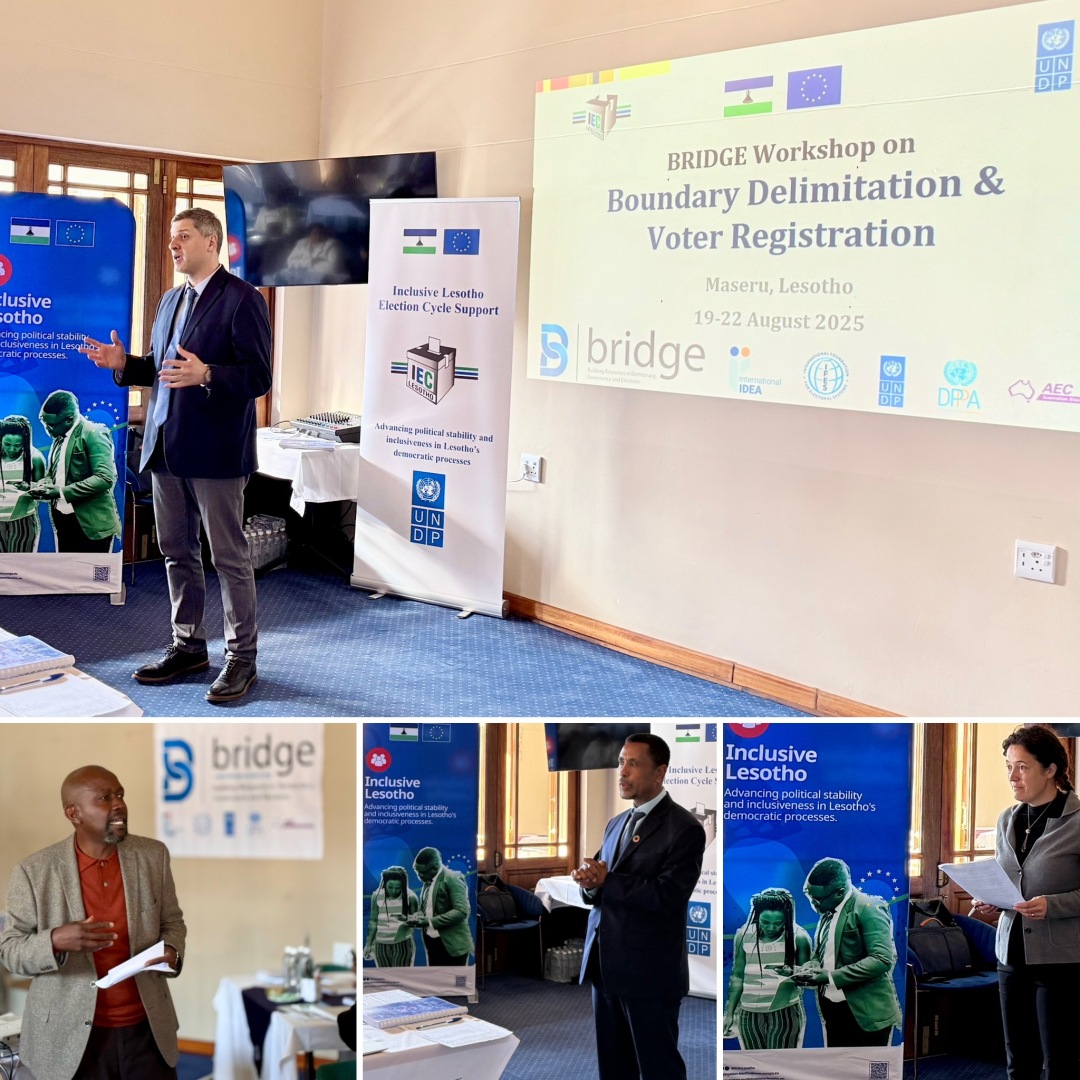
The UNDP Inclusive Lesotho Election Cycle Support Project, jointly funded by the European Union and UNDP, in cooperation with the Independent Electoral Commission (IEC) of Lesotho, successfully implemented a four-day BRIDGE customized modular workshop on Boundary Delimitation and Voter Registration from August 19-22 in Maseru.
The workshop was facilitated by BRIDGE international facilitators Natia Kashakashvili and Shalva Tskhakaya and welcomed 26 participants comprising 12 male and 14 female participants. The participant composition included 11 IEC Lesotho headquarters staff (including two IEC commissioners), 10 Senior District Election Officers, and 5 representatives from the Ministry of Home Affairs National Identity and Civil Registry (NICR).
This workshop was strategically designed to contribute to the broader goals of the Inclusive Lesotho Election Cycle Support Project through five key areas: enhancing the IEC’s technical capacity in boundary delimitation and voter registration, improving coordination mechanisms between electoral stakeholders, establishing standardized approaches for electoral boundary management, strengthening voter registration systems for inclusivity and accessibility, and building institutional knowledge that supports long-term electoral cycle management.
The workshop was officially inaugurated by distinguished dignitaries including the UNDP Inclusive Lesotho Election Cycle Support Project Chief Technical Adviser, a representative of the EU Delegation in Lesotho, the UNDP Deputy Resident Representative, and the IEC Lesotho Director of Elections. Their opening remarks established the framework for comprehensive learning in boundary delimitation and voter registration processes.
Workshop Content and Implementation
Days 1-2: Boundary Delimitation Foundations and Practice
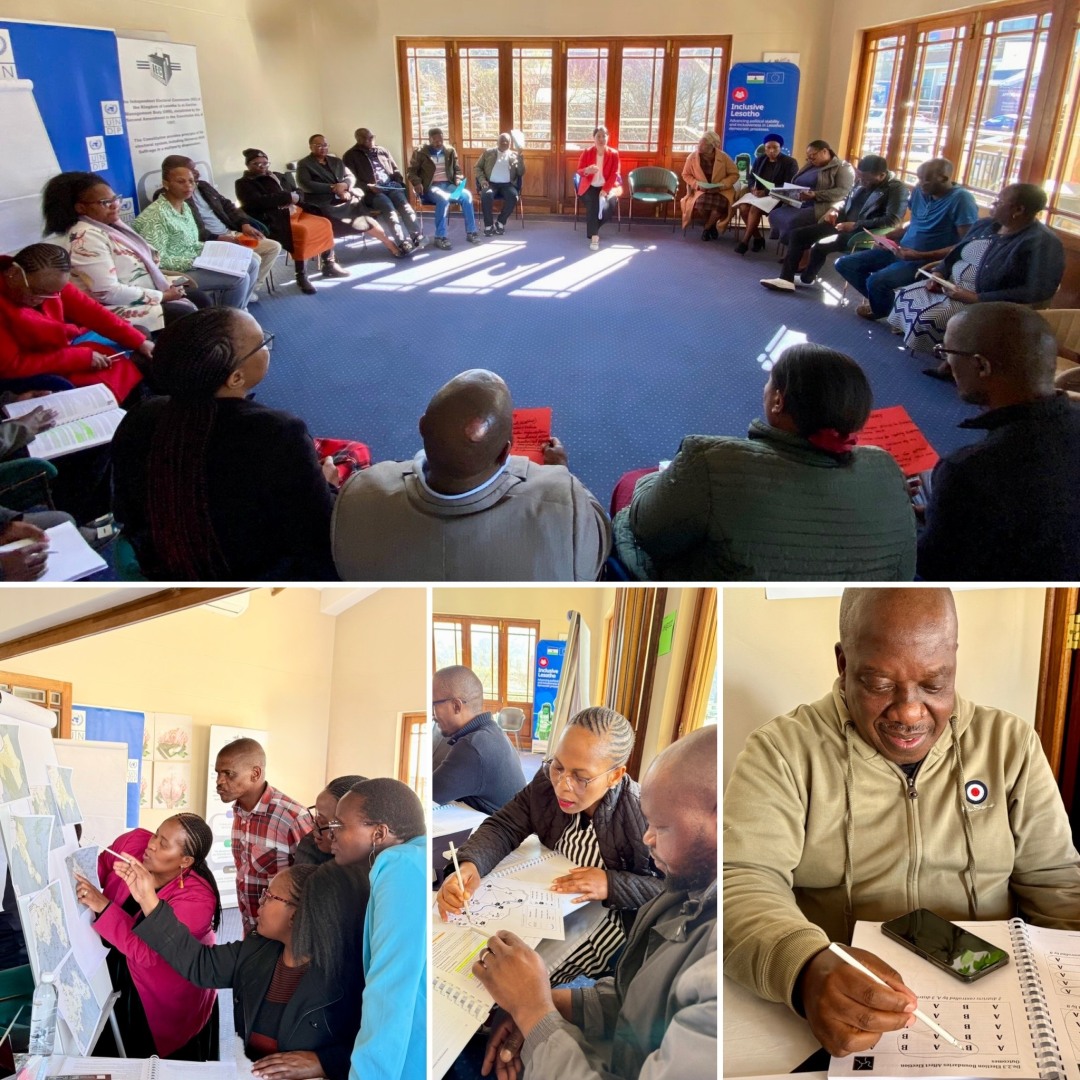
The first two days focused extensively on boundary delimitation fundamentals and practical applications. Participants engaged with theoretical underpinnings beginning with key concept definitions and progressing through systematic steps, frequency considerations, and triggers that drive delimitation processes. The sessions examined the significant impact that boundary drawing decisions have on electoral outcomes while exploring international principles and obligations that guide this work.
The second day transformed theoretical knowledge into practical skills through detailed exploration of delimitation criteria and hands-on tasks including data collection processes, apportionment calculations, and actual boundary drawing exercises. Participants engaged with real-world scenarios through the Leribe constituencies delimitation exercise, which provided practical experience in applying delimitation principles and understanding the complexity of decision-making involved in boundary work.
Days 3-4: Voter Registration Methodologies and Systems Integration
The third day shifted focus to voter registration fundamentals, covering guiding principles that underpin effective registration systems and various methodological approaches with their respective advantages and disadvantages. Participants examined implementation case studies from different countries and investigated technologies revolutionizing voter registration processes, gaining insights into both opportunities and risks associated with digital transformation.
The final day concentrated on operational planning and civil registry integration through intensive sessions on cross-system integration between voter registration and civil registry systems. Participants engaged in methodology clarification exercises, explored detailed registration steps, and developed comprehensive operational plans adaptable to their specific contexts, concluding with staff training requirement discussions.
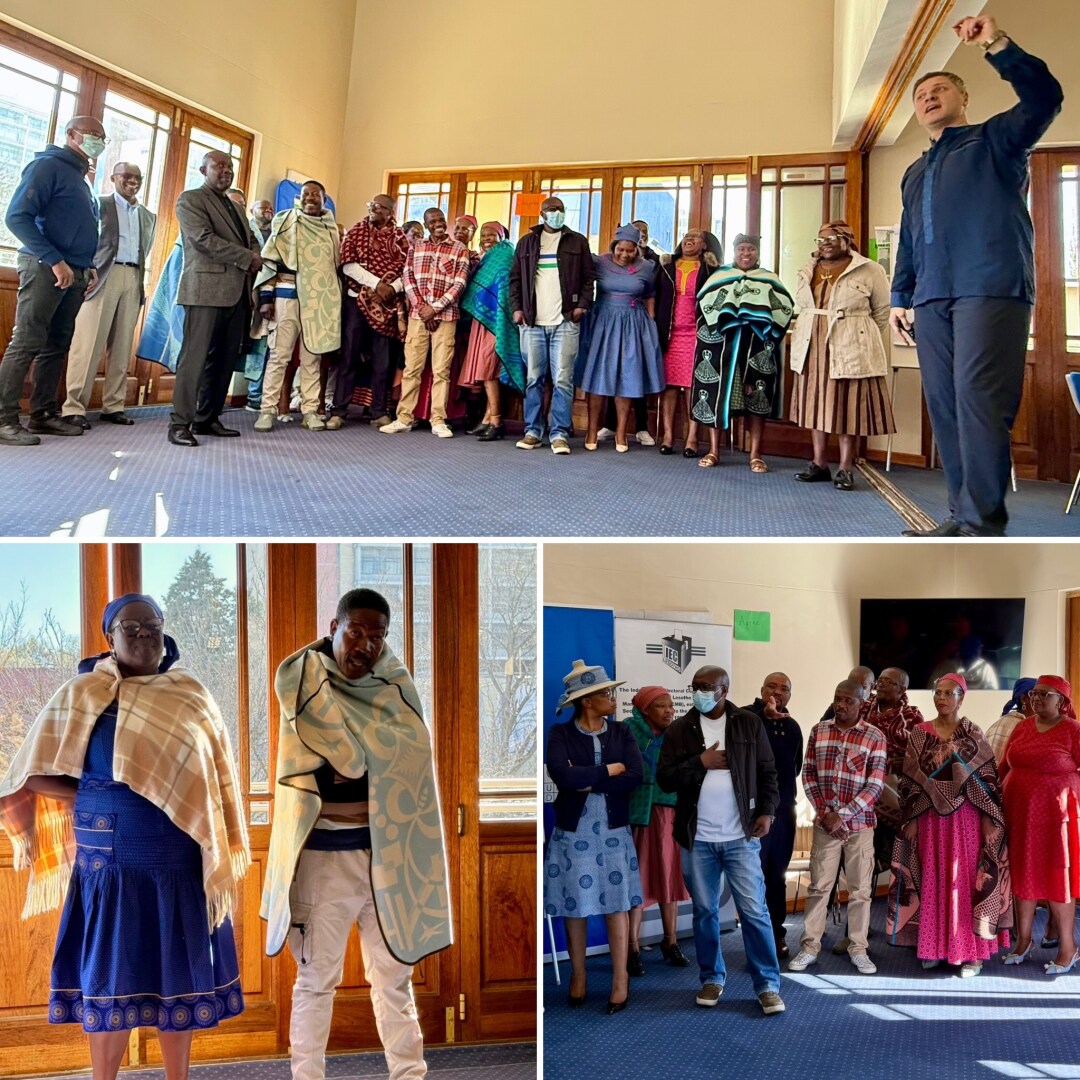
The workshop was ceremonially closed by the UNDP Deputy Resident Representative, the IEC Lesotho Director of Elections, and an IEC Lesotho Commissioner. Certificates were granted to participants with assistance from the IEC Commissioner and UNDP Deputy Resident Representative, marking the completion of comprehensive capacity building that equipped participants with both theoretical knowledge and practical tools for enhancing electoral administration capabilities.
Participant Feedback and Evaluation
Based on comprehensive participant feedback, the workshop delivered exceptional value through its combination of theoretical foundations and practical applications. As one participant powerfully expressed: “There are the theoretical basis that determine our activities. It makes us happy that the basis of our decisions is firmly rooted on knowledge.” This sentiment captured the workshop’s core achievement of providing participants with internationally recognized principles that could directly inform their decision-making processes.
Participants consistently praised the workshop’s organization, facilitation methods, and interactive approach, describing the learning environment as conducive and engaging. One participant noted: “It has been a very information and insightful training which was engaging and interactive. I really enjoyed it.” The workshop’s timing was also recognized as significant, with several participants indicating it was “long overdue” and highly relevant to their current work challenges.
The boundary delimitation sessions received overwhelmingly positive feedback, particularly regarding practical relevance and the five guiding principles of delimitation applied through international case studies. The hands-on boundary drawing exercises, especially the Leribe constituencies exercise, were highlighted as transformative learning experiences that provided real practice in applying theoretical knowledge to practical scenarios. As one participant observed: “The actual exercises afforded us real practice and appreciation of what it takes to make decisions.” This practical component helped participants understand the complexity and nuanced decision-making involved in boundary delimitation work.
Regarding voter registration components, participants found particular value in understanding guiding principles and various methodological approaches. The technology component was especially relevant given current global digitization trends, with sessions on information privacy and security risks noted as particularly eye-opening for many participants. One participant admitted: “I was not aware of these principles before,” highlighting how the workshop filled crucial knowledge gaps that many participants didn’t realize they had.
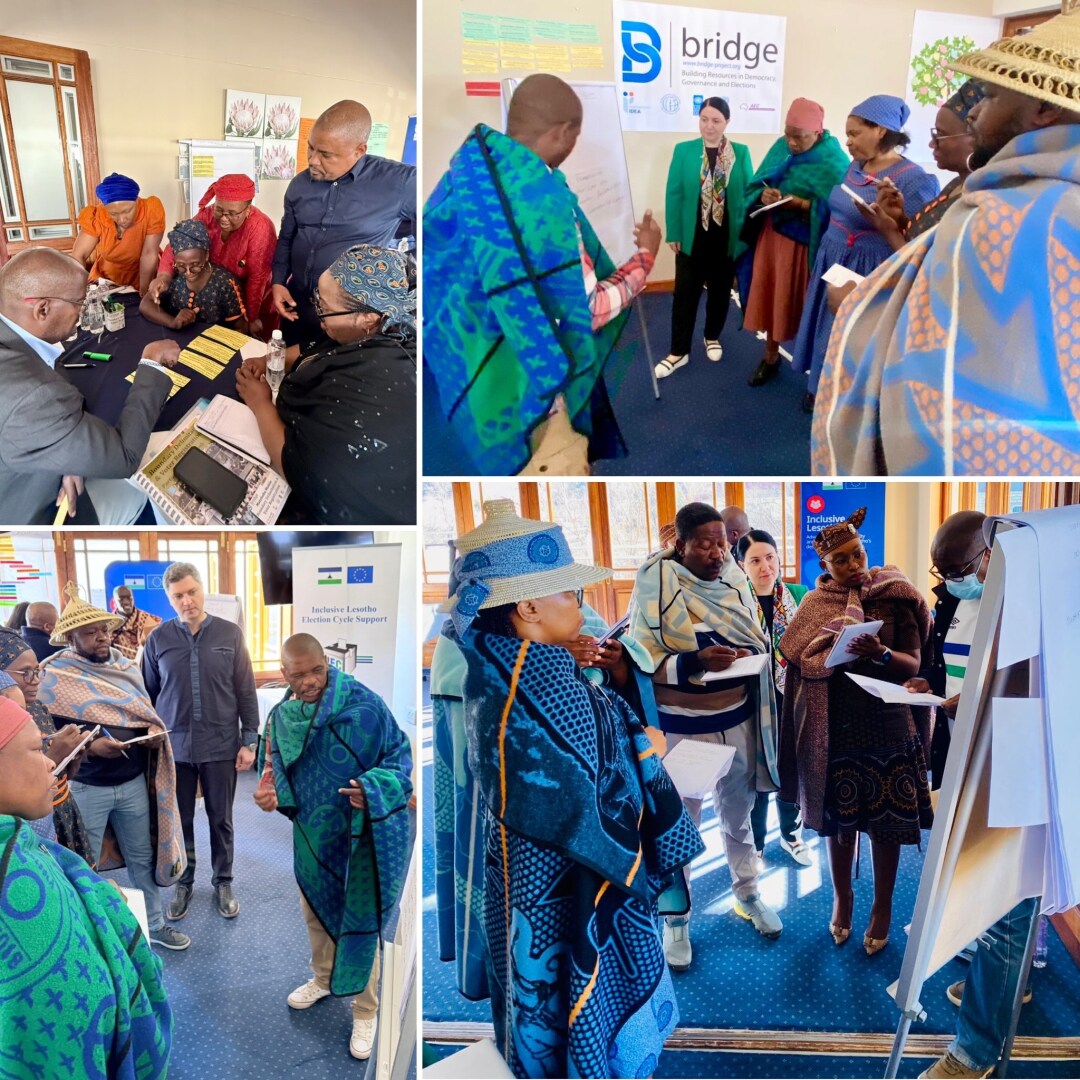
The facilitation approach received consistent praise, with participants describing it as “highly commendable” with clear learning methods and excellent content organization. The interactive methodology, including group work, presentations, and practical exercises, was repeatedly highlighted as effective, with the room setup, topic explanations, and discussion management noted as exemplary.
Key Recommendations and Future Directions
Participants provided several critical recommendations for future implementation including extending session duration for practical exercises and operational planning components, integrating BRIDGE curriculum into regular IEC staff training programs with refresher courses every five years, extending training to broader stakeholder groups, and enhancing content on cybersecurity and AI applications in electoral processes.
For boundary delimitation specifically, participants recommended conducting consultations with external stakeholders to build consensus and ownership of delimitation exercises. Multiple participants emphasized the workshop’s timing significance, noting its relevance to ongoing voter registration activities and strategic planning initiatives within their organizations.
Impact and Outcomes
The four-day BRIDGE workshop successfully achieved its objectives of building participant capacity in boundary delimitation and voter registration through a combination of theoretical grounding, practical application, and interactive methodology. Participants indicated the training significantly enhanced their capacity to perform duties more effectively and provided them with internationally recognized principles that could directly inform their decision-making processes.
The workshop provided crucial comparative perspectives through case studies and international analysis, helping participants understand global best practices while considering their applicability in local contexts. This approach strengthened participants’ ability to make evidence-based decisions grounded in international standards while addressing Lesotho’s specific electoral administration needs.
The consistent participant requests for regular, ongoing training of this caliber demonstrates both the workshop’s success and the continuing need for sustained capacity building in electoral administration. The workshop represents a significant investment in Lesotho’s democratic infrastructure and institutional capacity for managing electoral processes effectively and inclusively.