Gender & Disability Workshop
7-9 April 2026
Liberia
Bridge Modular Training Report on Gender and Disabilities-Buchanan, Liberia
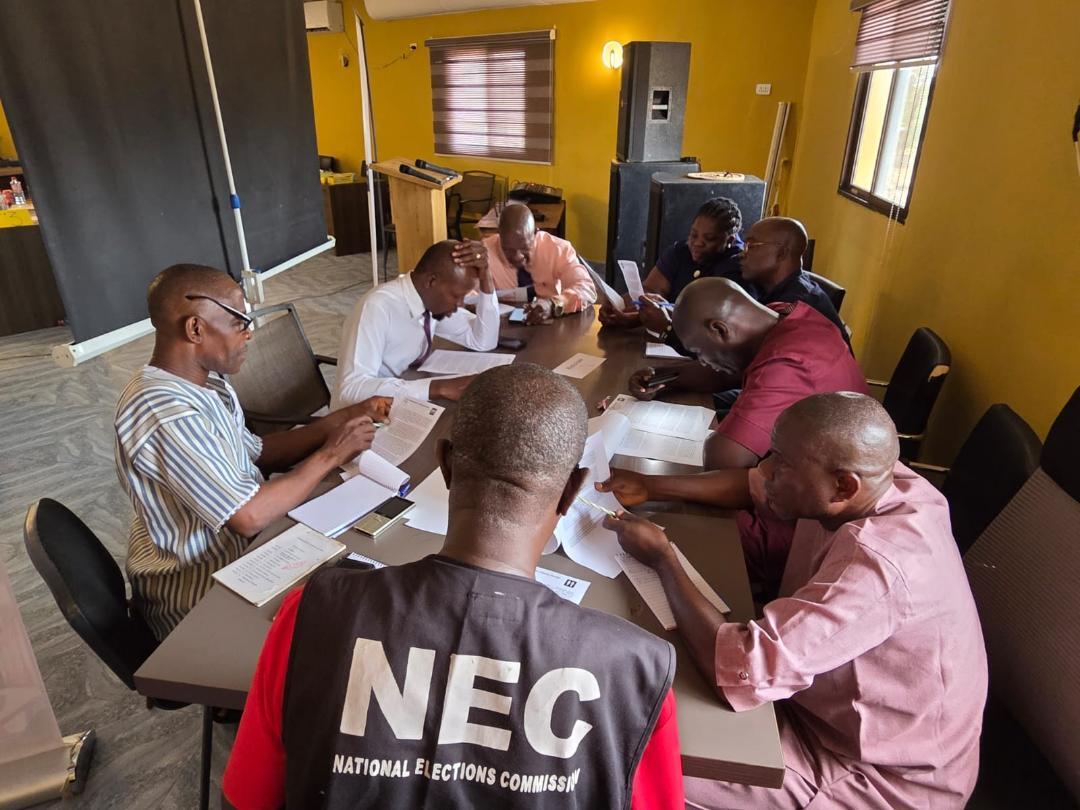
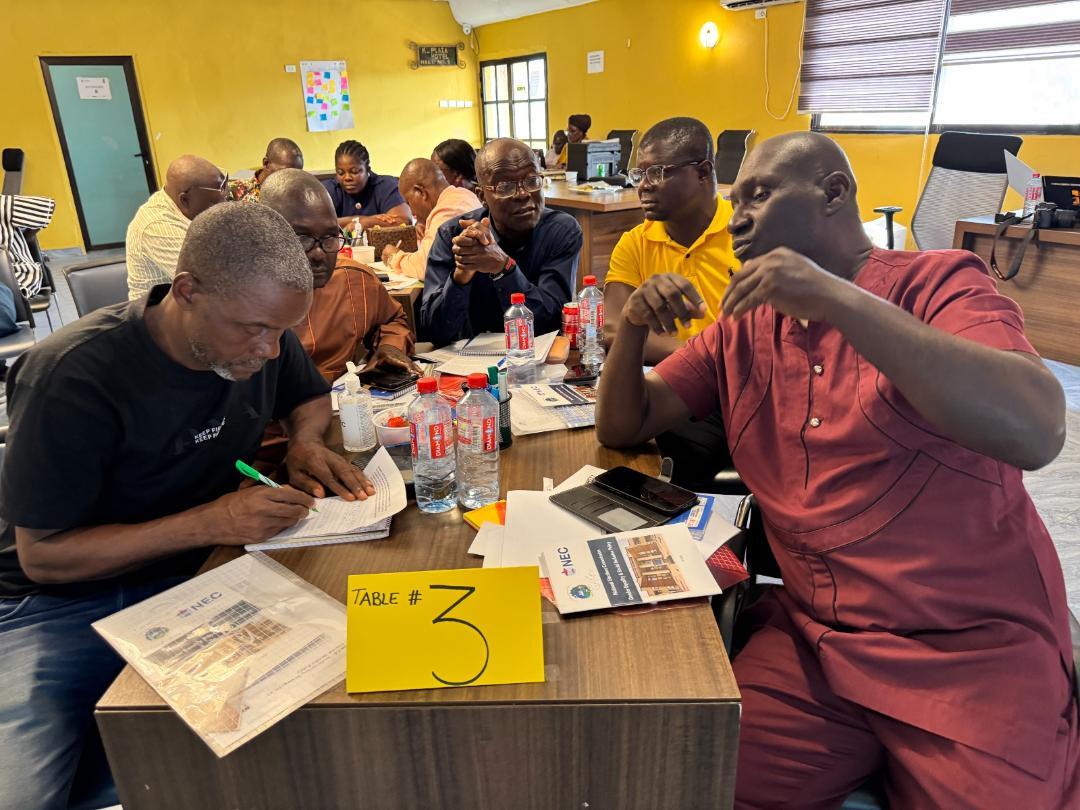
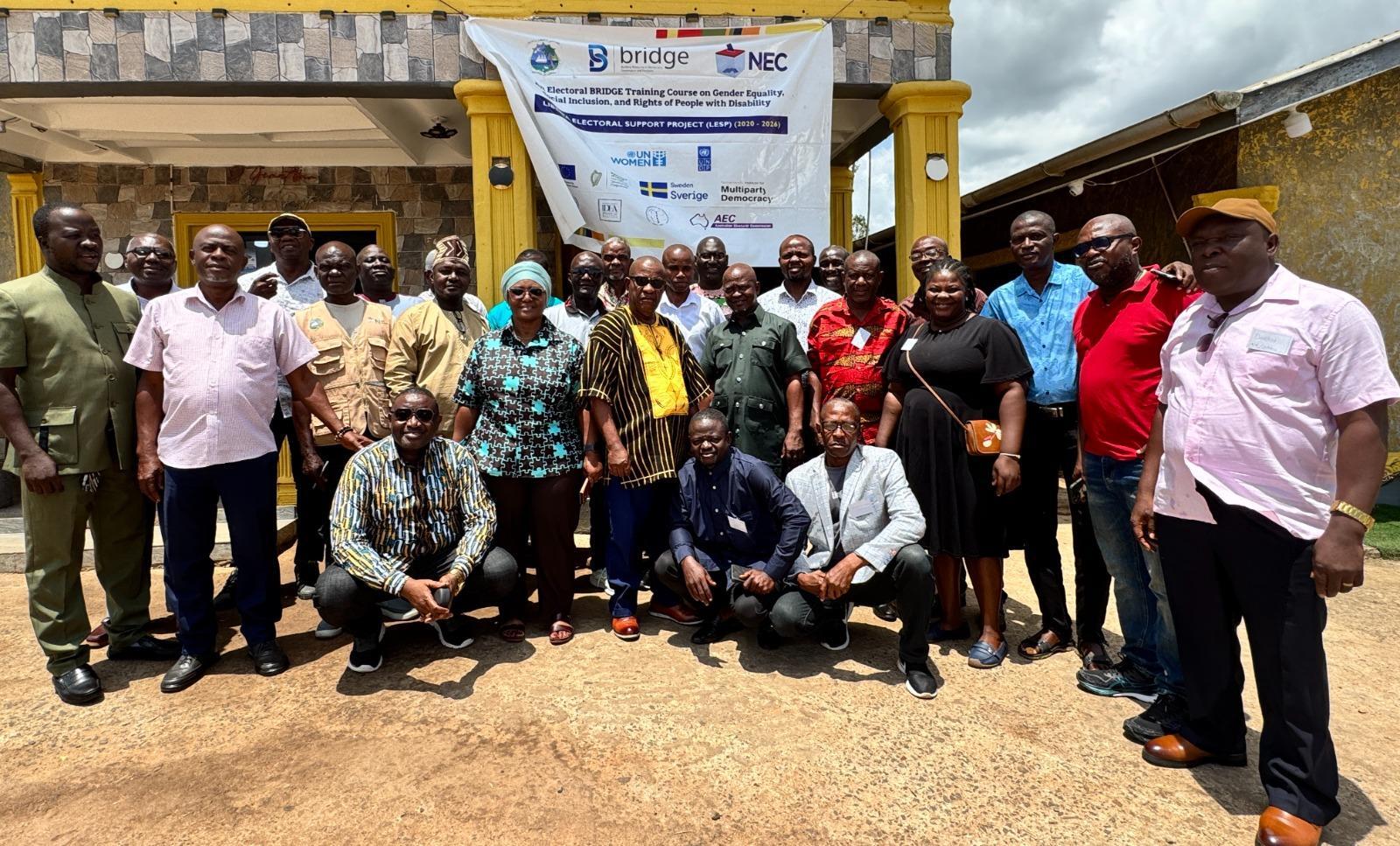
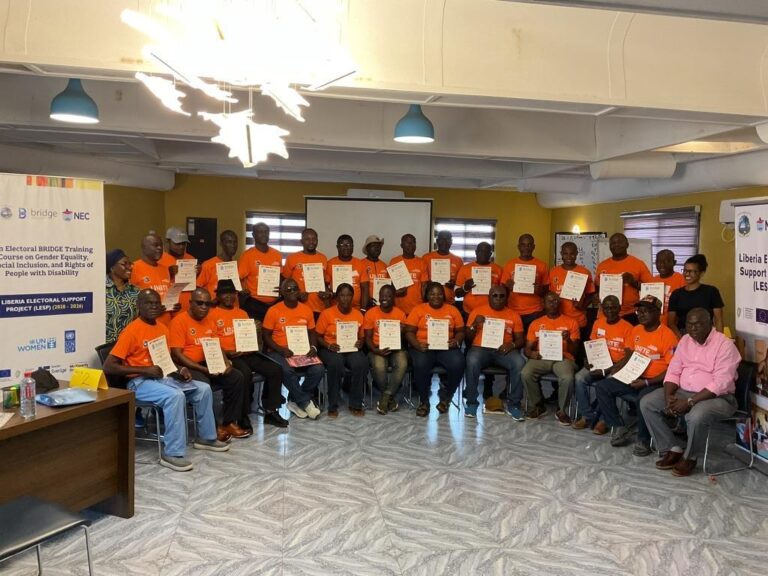
From April 7, through the 9th, 2026, the third and final cohort of the rounds of Bridge Training Course utilizing the modules on Gender, Disability, and Access was conducted. The training used one of the county capitals in Liberia, called Buchanan, as the venue. Twenty-five (25) members of the National Elections Commission (NEC) of Liberia completed three days of training. The course, in addition to strengthening their capacities to understand and relate to issues of gender equality, the wider context of encouraging the inclusion of people with disabilities in electoral processes, as well as, recognizing the rights of this significant sector of society.
The rounds of training cohorts, including the current one, which is being reported, engaged, and used topics amongst which were the following:
- Understanding the concept of Gender and Inequalities;
- Appreciating some of the baseline data related to the reports of vices against females;
- Connecting to principles equality in relations to the Universal Declaration of Human Rights(Article 21);
- Internal Gender Policies for EMBs;
- Gender natured of electoral and Political Violence
- Understanding Barriers to women and Disabled people’s participation in Electoral Processes
Because the National Elections Commission of Liberia has developed and validated a policy on Gender and Social Inclusion (GESI-Policy), it included some of the highlights of that instrument on the training agenda. The agenda also carried a couple of icebreakers, energizers, and coffee breaks.
The training goals were broadly aimed at strengthening capacity, however, it is envisaged that the training will address gaps in understanding and applying gender equality and disability inclusion within the field operations of the Liberian EMB.
The completion of this course marks another milestone in operationalizing NEC Gender Equality and Social Inclusion Policy and strengthening inclusive practices ahead of upcoming electoral activities.
Partner organizations have often provided support for these courses; in the same regard, the United Nations Development Program (UNDP) in collaboration with UN-Women financed the course.