Political Parties and Candidates modular workshop
27-30 January 2026
South Sudan
Strengthening Political Party Capacity for Democratic Elections in South Sudan
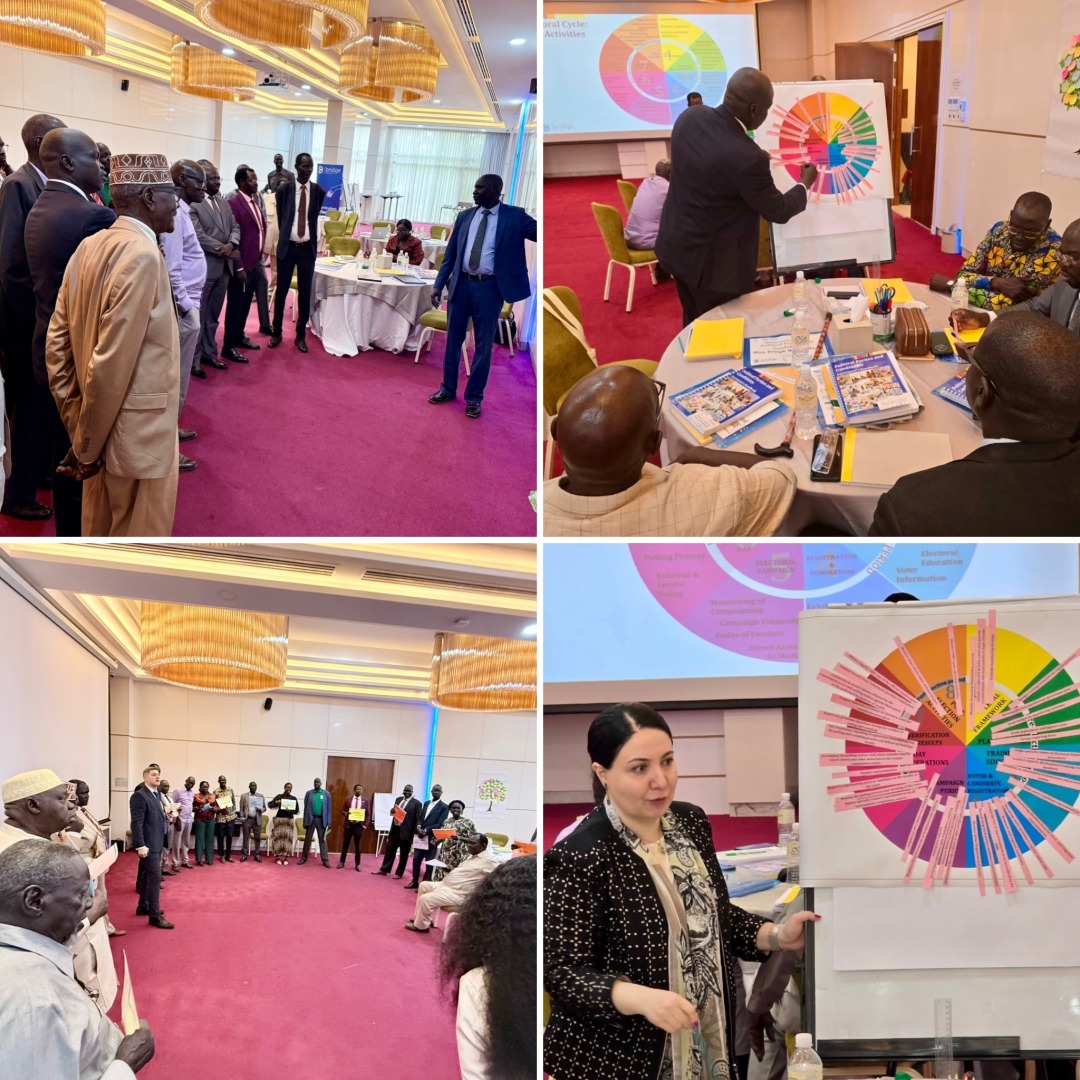
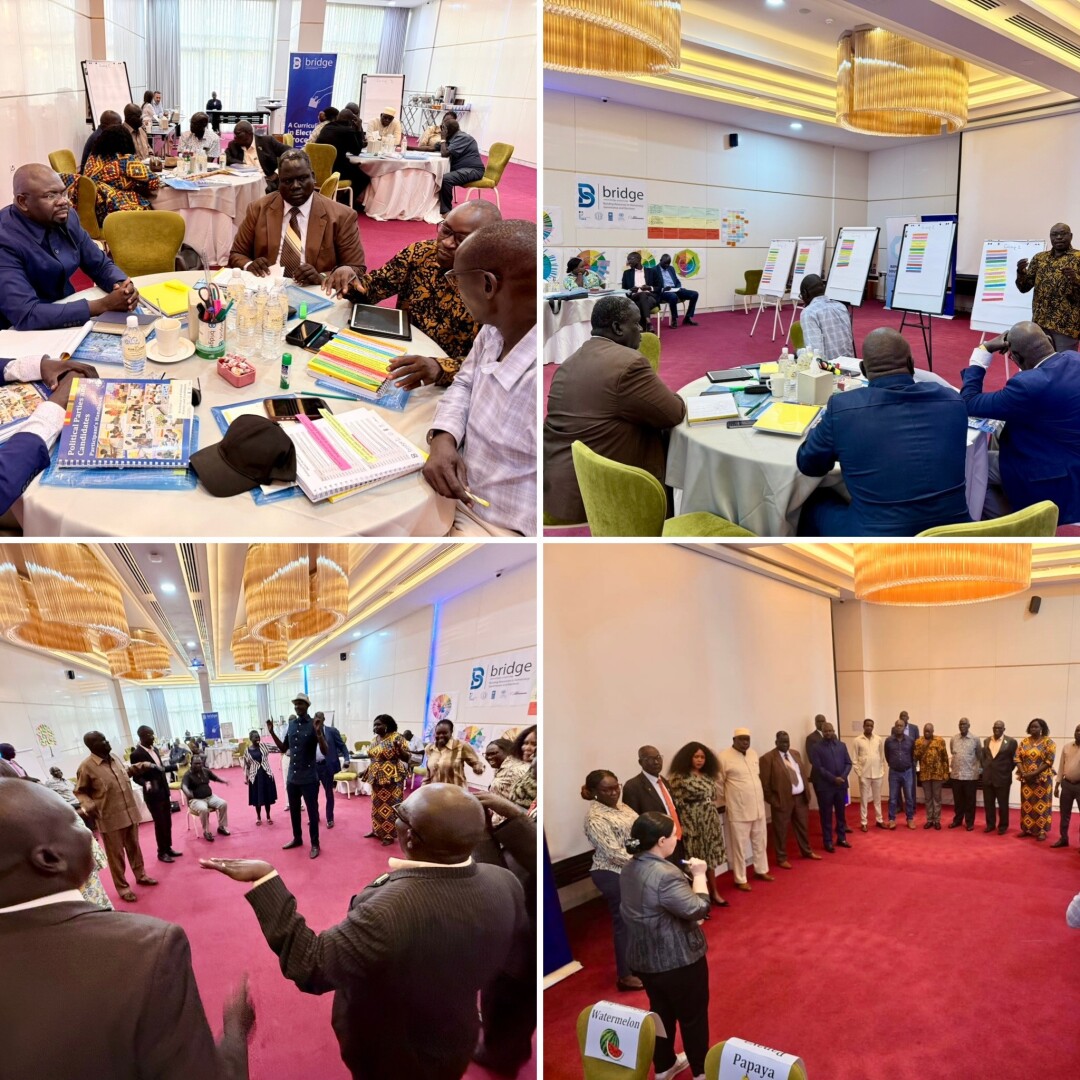
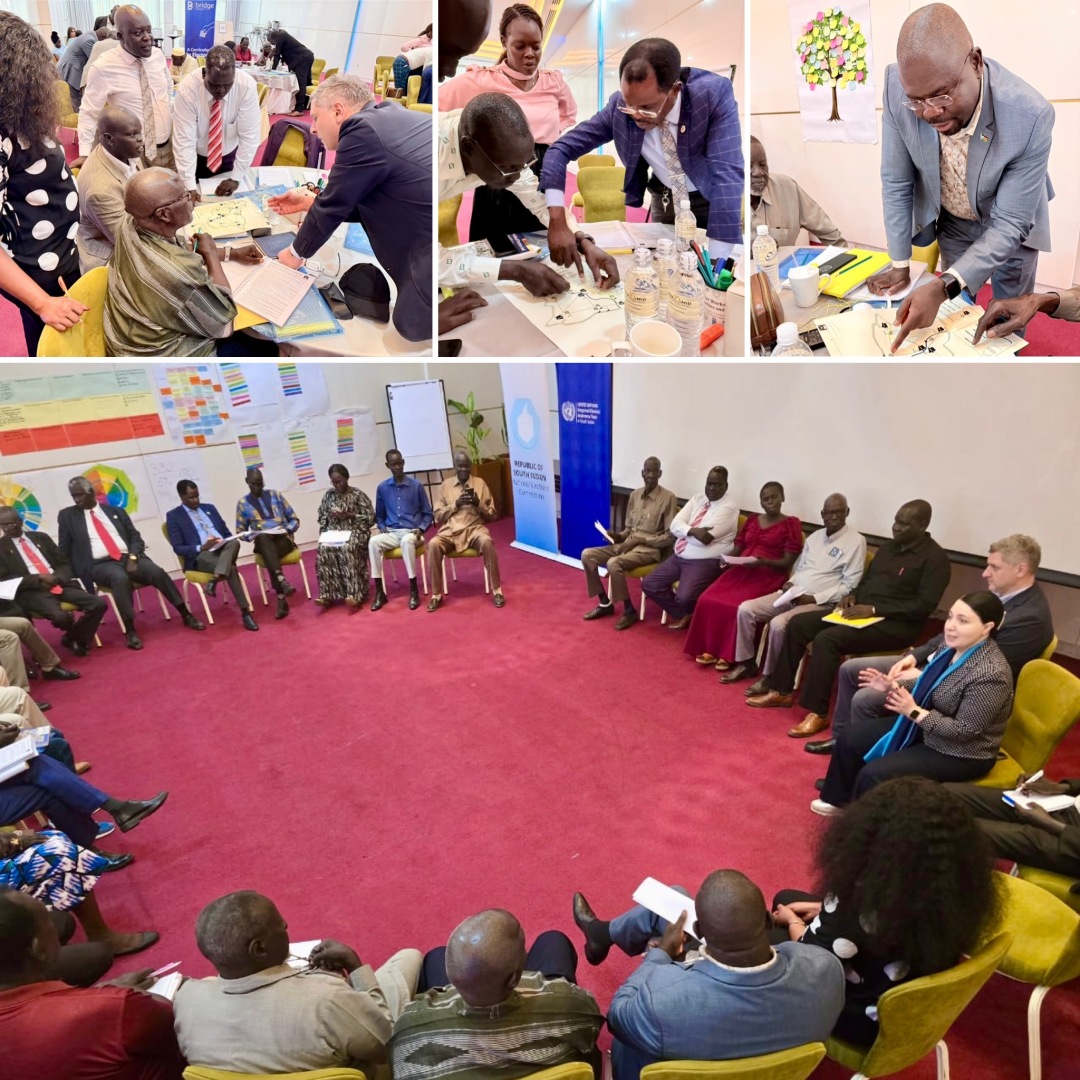
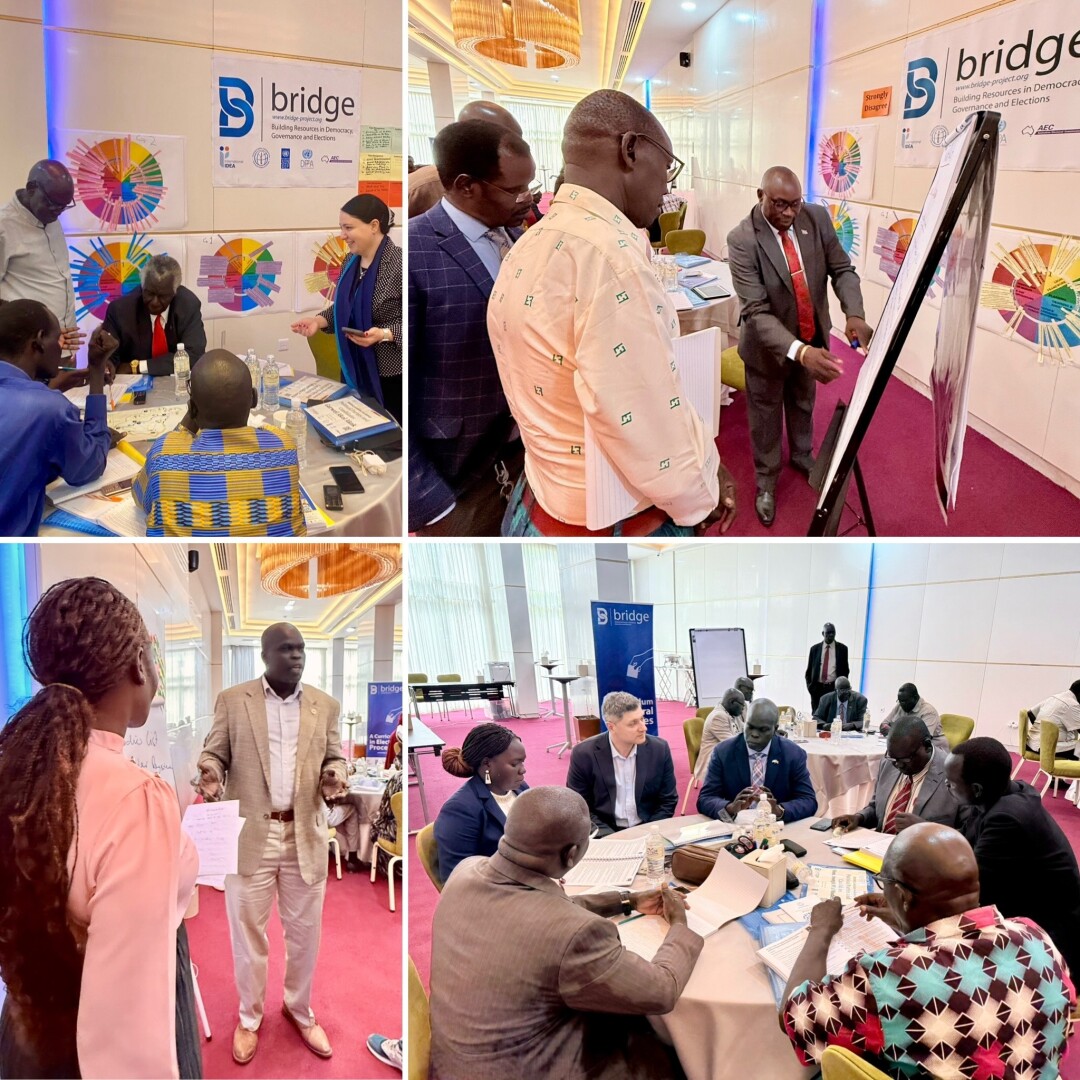
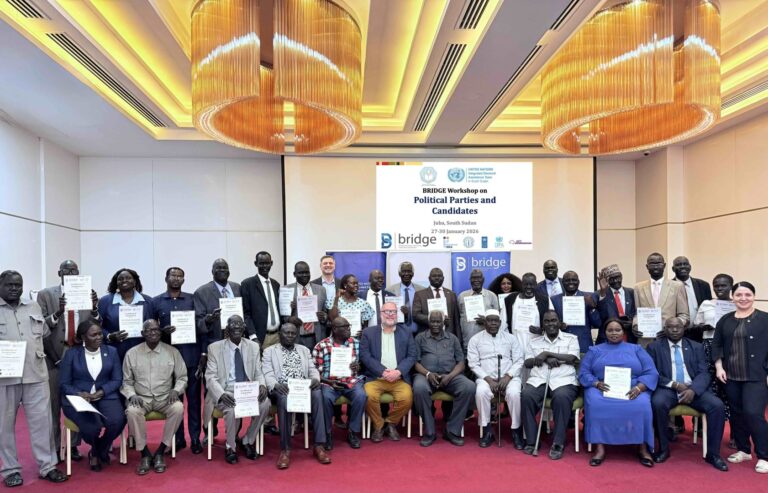
From 27 to 30 January 2026, the United Nations Integrated Election Assistance Team (IEAT) in South Sudan, in cooperation with the National Election Commission (NEC) and the UNMISS Political Affairs Division (PAD), conducted a BRIDGE modular workshop on Political Parties and Candidates in Juba. The workshop brought together 29 participants – comprising five women and 24 men – drawn from registered political parties across the country. It marked an important step in building the capacity of political party actors ahead of the 2026 elections, equipping them with the knowledge and practical tools needed to engage meaningfully with electoral institutions and uphold democratic standards throughout the electoral process.
The workshop was officially opened by Darren Nance, Director of UNIEAT, alongside James Akol Zakayo, Chairperson of the Political Parties Council, and Abednego Akok Kacuol, Chairperson of the National Election Commission. Their participation in the opening ceremony underscored the high-level commitment of both international and national actors to ensuring that South Sudan’s political parties are adequately prepared to participate in a credible and inclusive electoral process.
The workshop curriculum was specifically tailored to the needs of political party members in South Sudan. Over the four days, participants engaged with a broad range of electoral topics through interactive sessions, case studies, and collaborative discussions. The programme aimed to enhance participants’ understanding of the international standards and legal frameworks governing democratic elections; to build a comprehensive knowledge of the electoral cycle, including boundary delimitation, voter registration, and candidate nomination; to explore different electoral systems and their implications for political representation; to promote ethical conduct through political financing regulations and codes of conduct; and to foster constructive relationships between political parties and other key electoral stakeholders.
The workshop was facilitated by International BRIDGE facilitators Natia Kashakashvili and Shalva Tskhakaya, working alongside national co-facilitators Barnaba Mayor Deng and Ahon Malou Lueth Makeny. The combination of international expertise and local knowledge ensured that the content was delivered with both technical rigour and contextual relevance to South Sudan’s electoral landscape.
Feedback collected from participants throughout the workshop was overwhelmingly positive. The sessions on the legal framework of elections and international electoral obligations were consistently identified as among the most valuable, providing participants with a solid foundation for understanding how electoral processes are governed. The electoral systems component — particularly the simulation exercise and the hands-on calculation of seat allocations under proportional representation — was highlighted as especially engaging. Topics covered in the later days, including boundary delimitation, voter registration methodologies, candidate nomination procedures, political financing regulations, and the collaborative exercise in drafting a code of conduct for political parties, were also widely praised.
In both written and verbal feedback, participants expressed a strong desire for continued and expanded training opportunities. Many recommended extending future workshops to allow for deeper engagement with the material, and called for regular follow-up sessions – ideally every six months. Additional recommendations included the translation of materials into Arabic, a more deliberate effort to invite women participants from each political party, and the incorporation of topics on the roles of women and persons with special needs in electoral processes. Several participants further suggested that future workshops place greater emphasis on South Sudan-specific legal provisions and address areas perceived as requiring further clarity and the interplay between overlapping legal provisions.
The workshop was closed with remarks from the UNIEAT Director and the NEC Chairperson, followed by the granting of certificates to all participants. The ceremony recognised the dedication of both the facilitators and the participants and reaffirmed the commitment of IEAT, NEC, and UNMISS PAD to continuing efforts to strengthen political party capacity in South Sudan. As the country moves closer to the 2026 elections, this workshop represents a meaningful contribution to building the foundations of an informed, ethically grounded, and democratically engaged political party landscape.